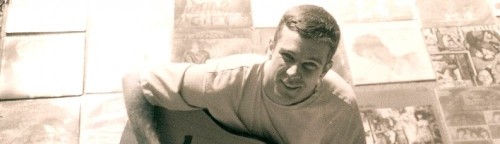

In 1992, Dave Markey released the documentary film, 1991: The Year Punk Broke. It is a video chronicle of the Sonic Youth/Nirvana two-week European tour in August/September of that year. It is one of, if not the most authentic video documents in rock music history. In late 1991, the grunge movement broke through into mainstream radio when Nirvana’s “Smells Like Teen Spirit” rocketed to the top of the charts, and their album Nevermind went multi-platinum. Everyone in the industry scrambled to sign the next underground sensation, and bands like Soundgarden, Jane’s Addiction and Pearl Jam soon became huge superstar acts. The Year Punk Broke is live footage of the grunge wave that crashed through.
As a film, it exhibits many weaknesses. There is much inane banter throughout, mostly due to the fact that everyone is stoned the whole time. This makes it impossible for any of them to have any kind of real discussion with anyone who is straight. People try too hard to be funny, and end up coming across as childish. Nirvana is the extreme case. In one scene, Kurt Cobain greets Thurston Moore and Kim Gordon backstage after an enthusiastic Sonic Youth performance. He starts with a star-struck fan shtick, which comes off lame. Kim Gordon replies by pretending to stick her finger down her throat. Cobain then violently opens up and sprays the contents of a champagne bottle to clear the room, then hurls it at the nearest wall. His mental instability is a recurring theme.
There is a notable lack of hygiene in the film. Kim Gordon, ever in sunglasses, smiles for the camera to show her teeth, caked with food and plaque. Her gums are red and swollen, and she doesn’t seem to care as she looks around. Drummer Steve Shelley’s teeth appear to be in even worse condition. The film’s low point, has to be when Thurston Moore is filmed flushing his excrement. He exits the bathroom without washing up.
And yet, all those faults and limitations with many others such as the film’s technical aspects can mostly be overlooked, because the music presented in this film is simply amazing. This documentary captures the energy of the grunge revolution with remarkable accuracy and clarity. Besides the Sonic Youth/Nirvana headliners, the film features highlight live performances from Dinosaur Jr. (“Freak Scene”, where large audiences in Europe clearly know the song), Gumball (“Pre”), and Babes in Toyland (“Dustcake Boy”). The film clearly shows how much Nirvana relied on Sonic Youth’s touring experience and leadership. Sonic Youth are constantly helping the younger, less-experience bands, find their way. One example is during an MTV interview, Thurston Moore instead of promoting Sonic Youth, introduces Mark Arm from Mudhoney, a Seattle grunge outfit invited to play a few dates on their tour. Then he directs the camera to “the biggest star in the room” who turns out to be an unknown-at-the-time Courtney Love! Love ends up being interviewed by MTV, and afterwards she is blur-filmed with a priceless look into Markey’s camera as she pouts, “I want to thank (MTV host) Dave Kendall for making me a star today…Giving me my big break.” Three years later Courtney Love’s band Hole, would in fact break through to the mainstream.
The film’s first song is “Schizophrenia”, one of Sonic Youth’s most beautiful songs, from Sister (1987). On the record Kim Gordon sings the second half, but here live, it is Thurston Moore alone. Their Sister LP was deeply influenced by the novels of Phillip K. Dick, whose vision of the future was bleak, desolate, and burnt out. Sonic Youth still managed to find beauty in it, even if only in the eyes of another. The songwriting reaches a new level of pop accessibility, and is distinctly rock-oriented by today’s standards. In 1987, the mainstream rock standard was U2 (The Joshua Tree) and REM (Document).
The next scene is one of many featuring Thurston Moore spilling his thoughts into a Mr. Microphone. He is leaning out of an upper-story window and broadcasting his message to a woman and her child, stopped on a bicycle in the street below. “You are human!….. You are human!” he shouts, “Go forth and thrash.” The next scene is a close-up of the head and neck of a guitar being played left-handed, warming up into a grunge riff. It is, of course as the camera widens, Kurt Cobain leading Nirvana into beautifully restrained version of “Negative Creep”, a key track from their debut album, Bleach.
The next time Nirvana is shown on stage, it starts with Cobain repeatedly banging his head into an amplifier, at the beginning of “School”, also from Bleach; and the song ends with him jumping into David Grohl’s drum kit, while he is still playing. Pieces are scattered in all directions, as the crowd enthusiastically cheers. Nirvana will play in front of the largest crowds in the film.
Sonic Youth’s “Teenage Riot” is next, and the live performance is montage-clipped, similar to their official MTV video for the song. “Teenage Riot” is an ode to J. Mascis, the leader of Dinosaur, Jr., and the first song from Daydream Nation (1988). As briefly alluded to in Part 1 of this review, this double LP stands among the greatest rock records ever. Its CD running time is 70:49, and not a second is wasted; from it’s swirling intros, to the No Wave guitar-crunch ending of “Eliminator, Jr.” The cover/back art are sublime paintings of a burning candle and a flickering candle, by Gerhard Richter, titled Kerse 1983 & Kerse 1982. Its symbolism of a band that always fought and sacrificed to keep their artistic flame alive, cannot be lost on anyone who thinks. Lee Ranaldo flourishes here, with his best songs “Hey Joni”, “Eric’s Trip”, and “Rain King.” Thurston Moore and Kim Gordon are at their peak also, and Steve Shelley’s drumming is hyperactive and airtight. In total, Daydream Nation is a complete artistic statement released in September of 1988, as George H.W. Bush, the then two-time US vice-president, was about to be elected US president; continuing a trend of social conservatism, economic setbacks for the working class, and military aggression. The message of Daydream Nation is hopeful and defiant, symbolized in the quietly burning candle. From a revolutionary perspective, it is the most essential rock album of the 1980’s.
Later in the film the Riot Girl movement makes its appearance on stage with Minneapolis’ Babes in Toyland performing “Dustcake Boy” from their debut album Spanking Machine. Lee Ranaldo would later produce their follow-up, Fontanelle in 1993; and once again, Sonic Youth would be be at, or very near the center of yet another new genre. Before Sonic Youth, there were very few recognizable women in rock music. Janis Joplin (overdosed on heroin in 1970), Patti Smith, Joan Jett, and Chrissie Hynde were among the handful of women who were rock, as opposed to pop artists. Kim Gordon always had a strong enough presence in the band to be an influence for women’s liberation and girl power. Most Riot Girl bands took Sonic Youth as their starting point. Top riot girl artists, Bikini Kill re-did one of their best songs, “Tell Me So”, live and turned it into “Thurston Hearts the Who”. The early 1990’s was an explosion of talented women artists, crossing over into the mainstream. Sinead O’Connor, PJ Harvey, and Liz Phair just to name a few, were all influenced by the underground music of the 1980’s, led by Sonic Youth.
In the film, as Babes in Toyland are earning EVERYONE’S respect; a cutaway finds Kim Gordon disguised in a hat, watching in the front. As a rock band with few pretensions, Sonic Youth always supported the bands who played with them. More than any other band, Sonic Youth understood what an artist wants most is an attentive audience. It is the performer saying, then asking, “This is my best, right now. What do you think?” Sonic Youth always paid attention, until it was time to look away.
The author of this article can anecdotally verify this, if the reader will allow a self-quote to illustrate:
“In January 1991, it was a long bus ride across town, on a cold January night to see Sonic Youth on their Goo tour, at the UW-Milwaukee ballroom. They were being supported by Redd Kross and a forgotten Minneapolis hardcore/punk outfit called the Cows, who went on stage shortly after I arrived. The lead singer was dressed bizarrely, leering and taunting the crowd. He spent most of his time on the left side of the stage, which I thought was odd. I stood about 15 feet back, off to the far right, when all of a sudden I noticed Thurston Moore (who is 6’6″) walking through the oblivious crowd with a video camera in his hand. He slipped past me without acknowledgement, and kept going until he disappeared through an exit. I had turned to face him the whole time, and shook my head wondering if anyone else had seen this? I started gazing around the ballroom, until I finally met a pair of eyes from across the room, a bit further back. It was Kim Gordon, looking at me. I was stunned for a few seconds, and panned back and forth between her and the Cows, who were still playing. She was in the crowd, watching the opening band. After a few more seconds, I felt I’d been taught something really important, through action alone. After a approving nod, which she only half-received as her attention was already drifting back towards the stage, I turned away from her. She disappeared a few minutes later, after being recognized and approached by others. How many bands can you name, ever gave their fans experiences like that?”
Nirvana’s “Endless, Nameless” is shown in a short clip, which will allow a brief discussion on the battle that was fought between artists and the music industry over compact disc formatting and presentation. By the early 1990’s, vinyl LP’s and cassette tapes had virtually disappeared from record stores. The industry preferred the CD format, which eliminated expensive vinyl packaging, and sold at a higher price, around $12-13 at the time. LP’s and cassettes were in the $6-8 range. Along the way, there had been skirmishes between artists and the industry concerning creative control over CD track indexing. In 1988, Prince had released Lovesexy with no index markings to indicate track separation, meaning the only way to skip ahead or back was to manually fast-forward or rewind through the songs. While some fans complained about this inconvenience, it was an industry decision to wrest final control from the artists over CD track indexing, and in later editions of Lovesexy, the tracks are individually sequenced.
As an incentive to buy the pricier compact discs, bonus tracks were often added to entice fans. Originally (after the first 50,000 copies which had no bonus track), at the end the Nevermind CD, as “Something in the Way” faded into oblivion, unknowing fans thought the album over, but instead the CD paused for ten minutes. There was no way to fast-forward. If you wanted to hear the song, you had to wait. After ten minutes of silence, like a volcano that oozes lava before it bursts, Nirvana erupted into six minutes of molten grunge violence. “Endless, Nameless” is largely incomprehensible, as Kurt Cobain screams his vocal cords raw, amid a sea of ultra-loud rock noise. In many ways it perfectly captures the essential and flawed nature of Nirvana. Today the CD is programmed with ten minutes of dead space so the listener can manually fast-forward through.
Sonic Youth achieves their “Endless, Nameless” glory in this film, in a song that is not listed in the credits, and is only identified at its very end by Thurston Moore holding a newly purchased Germs bootleg CD in front of his face. The band is barely identified by visual cues as the song begins, and shortly into it, all figures become indistinguishable. Soon after, the lights flicker faster and brighter, until the viewer has to look away and shut their eyes, due to the extreme intensity. The best head position becomes facing down, eyes shut; perfect listening position. Now listen to their music.
The final two songs from the film deserve a brief mention. Nirvana’s “Polly”, from Nevermind is one of Kurt Cobain’s most affecting songs. This author has read many interpretations for this song, but none of them satisfy more than my initial one. Polly is about a real/imaginary friend, who happens to be a parrot. He notices and describes various things about this parrot. The reason he spends so much time with his imaginary friend, is because he can no longer relate to actual people.
Sonic Youth’s “Expressway to Yr. Skull”, the final track from EVOL (1986), and one of their greatest anthems, closes the film. Thurston Moore sings:
We’re gonna kill the California girls
We’re gonna fire the exploding load
Into the milkmaid maidenhead
We’re gonna find the meaning of feeling good
And we’re gonna stay there just as long as we think we should
Mystery Train
Three-way Plane
Expressway to Yr. Skull
The album title, EVOL is love spelled backwards. EVOL is also where drummer Steve Shelley enters, and Sonic Youth completes their sound. On the vinyl LP, “Expressway to Yr. Skull” (alternately titled, “Sean, Madonna, and Me”) skips into a lock groove at the end, repeating itself until the listener picks up the needle. It is Sonic Youth’s version of infinite love.
In 1990, Sonic Youth signed a major-label deal with Geffen Records, then released Goo (1990), Dirty (1992), and Experimental, Jet Set, Trash, and No Star (1994); all of which are now acknowledged post-punk classics. In 1994 they also released their authorized band biography, Confusion is Next: The Sonic Youth Story; an authentic insider account of their history, written by Alec Foege. After that it was Washing Machine (1995), and the beginning of what can be best described as Sonic Burnout. Their vitality and creative spirit had finally been exhausted, and anything after that must be considered as part of their dinosaur period, which continues through today. A band that once proclaimed: Kill Yr. Idols, would have wanted it that way.
Thurston Moore once said, “We’re the New Beatles, only no one knows it.” Unfortunately, he’s still right. The Beatles were an artistic and commercial success for a long period (1962-1970). Their’s was a era where the industry expected bands to crank out 2-3 record albums a year, not being too concerned with overall album quality. What mattered was having a few hits that could plugged for radio. When the Beatles got off a plane in New York, they brought more hits on one record than anyone before had ever imagined, thus re-defining their era. They did it again with Sgt. Peppers Lonely Hearts Club Band (1967), by re-defining once again, what an album was; from its artwork, to its presentation, to its message. Sonic Youth in its 14-year run from 1981-1994, managed to re-define rock music from an underground perspective in many similar ways. They were shut out because they were artists who refuse to compromise with the industry from the start, and that is really the only important objective difference between Sonic Youth and the Beatles.
In the end, we should judge artists for their triumphs, much more than their failures. It was their daring spirit and willingness to sacrifice personal gain for their art, that still draws people to Sonic Youth. This band, and the thousands of others from the 1980’s, that most people never got to hear, are the musical embodiment of revolution. The grunge movement that Sonic Youth helped carry through to the mainstream, was soon dissipated and demoralized because its energy was not harnessed by a revolutionary political force. As a result, today’s independent musical artists face many of the same challenges Sonic Youth met in the 1980’s. Now, college radio is completely monopolized by the major labels, through subsidiaries. Today, it is the Internet that is likely to be the new media form, that will allow a breakthrough of independent music. The artists who succeed in this will combine Sonic Youth’s hard-earned lessons, with their own revolutionary spirit.
PS: On October 14, 2011, Kim Gordon and Thurston Moore announced that they separated after 27 years of marriage.
Sonic Youth is no more.
Thank you forever to: Thurston, Kim, Lee, Steve, Bob & Richard for their timeless music. RS
