Since it’s on every network, all weekend, here’s what’s going on. The WNBA is political theater first, with black & white lesbians and a few straight girls playing their brand of basketball. It’s a mixed bag to say the least. The WNBA has a LOT of marketing juice behind it, but it isn’t making money or maintaining much sporting interest. Yet people are tuning-in (or at least curious) and this is why.
Sophie Cunningham began her WNBA career in 2019 with the Phoenix Mercury, after playing her NCAA basketball at Missouri. Note this was just before the NIL boom in college athletics, AKA the Caitlin Clark University of Iowa years. Sophie Cunningham was traded from the Mercury to the Indiana Fever in a 4-team deal in February 2025.
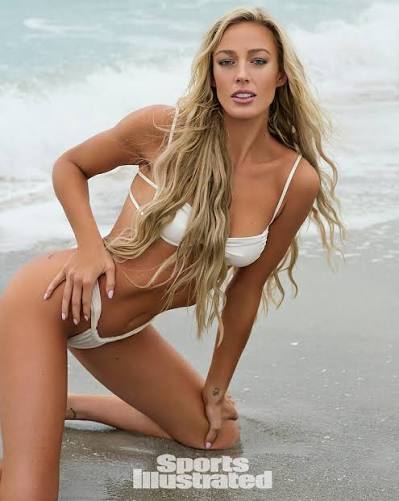
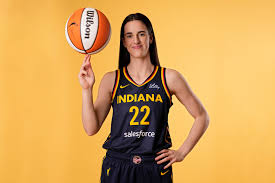
Sophie Cunningham, a straight white guard for the Indiana Fever, and now the starlet of the WNBA. Being attractive AND a teammate of Caitlin Clark has pushed Sophie Cunningham into the WNBA spotlight. Sophie Cunningham is a winning player for the Fever despite her lack of scoring, as she does other things to take the opposition out of their rhythm and help her team win on both ends of the floor. What she does, and the effect she has on a WNBA game, can’t be measured with conventional stats. Sophie Cunningham demands the eye test.

Sophie Cunningham’s comments on transgender athletes, written-up by ESPN staff writer Hallie Grossman, titled “Love her or hate her, Sophie Cunningham won’t be ignored,” were made five months earlier, in February, yet not published until July 21, 2026, just before the WNBA All-Star weekend. Sophie Cunningham was quoted in it, “I got a lot of negative feedback about me hating trans. And I’m like, ‘I never once said that.’ I think that I am here to extend love. But I also think with that love is truth, being honest. And I want to protect young girls in a locker room, or young girls in sport who shouldn’t have to go against biological men.”
Over 90% of Americans agree with that, yet MAGA gets to hold up Sophie Cunningham as a beacon of light & reason in a sea of darkness & post-modernist gobble-de-gook, when all she did was say what most people already think. Was that courageous? In hindsight yes, because she stood behind her words when the fake left attacked her. The WNBA has provoked attacks on her.
Seattle Storm minority owner Celeste Keaton attacked Sophie Cunningham’s supporters at a recent game after those comments were belatedly published by ESPN. Again, that’s a WNBA team owner at home, attacking fans for having an opinion & expressing support for an opposition player. Celeste Keaton was suspended for 5 games by the WNBA because that was so over-the-line it had to be done.
After that, Sophie Cunningham had to deal with Minnesota Lynx head coach Cheryl Reeve wearing a t-shirt that read “trans kids belong” on the front, and made a point to speak with Sophie Cunningham over this at half court before the game with the national TV cameras rolling. It was a despicable freak show stunt.
Yeah, that sucks for Sophie Cunningham, and her words on that experience were nicely expressed the other day, “WNBA media, all we ever do is cover everything except basketball, and it’s like, what are we doing? The WNBA media, all we ever do is cover everything except basketball. You can talk about other things, those are great stories, it shows fans who people are outside of the court, but I think we gotta keep the main thing the main thing.”
Sophie Cunningham thinks the WNBA should be about basketball first, which is refreshing coming from a modern WNBA player, because the quality really needs to improve and it isn’t going to happen unless the WNBA gets serious about basketball again. For a while they were, but now the WNBA has been stunted by identity politics. The Democratic Party expresses its DEI agenda through the WNBA, and that is a much bigger (& more permanent) force than basketball.
This is what WNBA fans & viewers are watching. I’d never want to be trapped at a modern WNBA game. I’ve seen a few men in crowd shots, presumably dragged there by their wives, looking bored, helpless & neutered. No thanks. I need to be able to change the channel on the WNBA, otherwise it feels like I’m being constantly lectured & virtue-signaled by my mother & all her bridge group friends.
I watch enough WNBA on TV to get their message, strategy & tactics– while figuring who can actually play basketball. Once I absorb it, I write it up and move on to the next story. The modern WNBA is something you have to flush, otherwise it poisons you. Some stories take longer to handle than others. There is a baby worth keeping in the WNBA, but all the unhealthy bathwater surrounding it needs to be replaced with something better. In other words, the WNBA is still developing, but its womb has become so polluted with identity politics that it’s threatening a stillbirth of the women’s game.
Conclusion, since Trump retook the White House in January 2025, Democratic Party DEI government initiatives have been ruthlessly cut. The #MeToo campaign, which began in late 2017, is now widely despised; while the racialist ‘1619 Project’ of Nicole Hannah Jones backed by the New York Times, has been thoroughly discredited by serious historians & the WSWS. The Democratic Party needs an outlet for their fake left DEI propaganda, and it has fallen to the WNBA for these reasons. The WNBA players are pawns in this game, as most are just happy to be along for the money-train ride.
Sat 08 Aug 2026 08:48 PM CDT
WNBAPA: “We embrace justice equity, diversity, and inclusion. Those are the values that unite this Union and allow it to protect women’s sports while creating transformational change. Hate, abuse, and demonization of any person or group of people, including transgender people, only fuel fear, division, and harm. We will continue to have hard conversations. But we will not be used as political pawns.”
This WNBAPA statement, released just before the Sky-Fever game today came straight from the Democratic Party, so yes they’re pawns. Identity politics couched in mealy-mouthed word salad. No protection for girls & women, or even confused kids, just blather about “creating transformational change” and “hard conversations”. The WNBA & DEI say they will follow the science– until it leads to the “wrong” answer, then they shut down the discussion.
These ESPN-DEI bobbleheads couldn’t even talk about DiJonai Carrington’s flagrant 2 foul on Sophie Cunningham at halftime of the Fever-Sky game. Apparently, it’s too hard of a conversation for these overpaid analysts. The WNBA certainly isn’t looking for that kind of transformational change. The WNBA hates integrated success, and intentionally stirs up racial, gender & sexual orientation conflicts. It then ducks them when they become the “wrong” narrative.
As far as DiJonai Carrington goes, she’s a black girl with white girl hair screaming ‘white privilege’ on social media after cheap-shoting Sophie Cunningham, who is too gutless to take questions from the media after the game. Typical WNBA weak stuff and this is how they become political pawns.
Not all plays are equal. Sophie Cunningham finished the play in which she was flagrantly fouled by DiJonai Carrington. She then got up off the floor and in her attacker’s face. After the players being separated and the play reviewed for a foul upgrade, Sophie Cunningham then swished her free throw. Sophie Cunningham scored three points in a game the Fever eventually won by four, and that play in the second quarter won it. It will be remembered & discussed for a long time in WNBA lore.
———–
Enes Kanter played as a big man in the NBA for multiple teams from 2011-2022. Last Friday, August 7, 2026, Enes Kanter announced he had officially declared for the 2027 WNBA draft. “I’m simply asking that the current rules be applied equally to everyone — the rules that represent the very values many WNBA players and coaches have publicly advocated for.” His full statement is here.
For the record, you have to be a woman to play in the WNBA. The problem is– what a woman is, and how a woman is defined. XX v XY aren’t used by the WNBA. According to the WNBA Collective Bargaining Agreement, the league states that “only players who are women are eligible to play in the WNBA.” As we can see, the WNBA has put itself in this ridiculous position largely because it has neglected its due diligence. The science on this has been available for awhile, but the WNBA has refused to apply it. The WNBA prefers political flexibility on this issue.
There are no basic criteria, such as specific testosterone limits, or requirements for gender-affirming procedures to clarify the definition of a woman in the WNBA CBA. There is also nothing stating that a player can (or can’t) become eligible purely by self-declaring as a woman. It’s remarkable that this league has been in existence for 30 years, with unlimited legal assistance from the NBA and such, and yet they’ve never resolved this fundamental issue which affects league integrity. It’s a testament to the laziness of the WNBA, and it has opened them up to merciless ridicule on all fronts. Enes Kanter has called out the WNBA on their own bullshit, and sports fans love it.
Enes Kanter’s announcement has been met with silence from the WNBA. Instead of supporting Enes Kanter in his difficult transition in identifying as a woman, he’s been labeled an embarrassment by the same WNBA media that has vilified Sophie Cunningham. This is nothing less than a transphobic attack on Enes Kanter by people who are hateful & fearful of transformative change. This demonization of Enes Kanter for identifying as transgender, only fuels fear, division, and harm. Enes Kanter and his/her supporters will continue to have hard conversations on this matter. Enes Kanter and his/her supporters will not be used as political pawns.
———-
As mentioned earlier, Sophie Cunningham made her comments to ESPN’s Hallie Grossman in February. Recall that the new WNBA CBA was still being negotiated at that time, and wasn’t ratified by the players & board of governors until March 23-24. So when Cunningham was queried by ESPN, this issue (& all others) were being collectively bargained by lawyers on all sides, and yet none of these WNBA leaders are being held to account for all the murkiness that exists in their CBA language over such a basic issue as what is a woman? When ESPN asked Sophie Cunningham on transgender participation in the WNBA, its “leaders” were ignoring the issue completely. Then five months later, Sophie Cunningham is made the scapegoat for this lack of foresight & due diligence from WNBA leadership.
From November 2025 to late March 2026, the WNBA was at a standstill and its 2026 season was in question. This CBA signed in early May was hailed as a transformative agreement, and not once did any fan hear about transgender rights as a collective bargaining issue, nor was it reported or discussed in the media. It was about players salaries, revenue sharing, number of games, new franchises, etc.
Not one single WNBA player stumped for transgender rights during the nearly five months they were bargaining collectively, and WNBA players were very outspoken on what they thought was important to them. But now the WNBA collectively parrots transgender as a fundamental issue of principle. These WNBA lesbians are so easily manipulated, they always do whatever their bosses tell them to do.
* As far as the all-important “hottest WNBA lesbian straight guys would love to convert” goes, Azzi Fudd of the Dallas Wings is in a class by herself. Sydney Taylor of the Chicago Sky has a beautiful smile and natural look I like, so she’s a yes to try this suicide mission. I haven’t seen all of them, so… If I’m standing near either of these two at a party, I’m trying to convert them. I believe lesbians appreciate it– either way. It’s always their decision, and when they refuse I mutter to myself, “Lesbians.”
** Azzi Fudd is going to shut down any straight guy because that isn’t her orientation. But orientation is often fluid, so… Every woman wants to be acknowledged as beautiful, but it’s a dangerous line to cross– hitting on a pretty lesbian. There is little chance of success, as their fears & hang-ups often overwhelm them. They just aren’t ready for a man. Besides that, butch lesbians don’t approve and bitch factor is always in effect. Watch out! The only way I can get Azzi Fudd to give me the time of day is to be next to a friendly beautiful straight girl. Then I have Azzi Fudd where I want her. That’s straight guy stuff, consider it a WNBA LGBTQ PSA.
*** I honestly picked these two women because I thought they were the prettiest WNBA lesbians. Now I learn that Sydney Taylor reportedly suffered a left groin strain in the third quarter of the Chicago Sky’s loss to the Phoenix Mercury on Monday, August 3, 2026. No one saw the injury, and apparently there is no video to confirm it. Sydney Taylor was not selected to play in the 2026 WNBA All-Star game held the weekend of July 25, but she did attend the All-Star weekend events in Chicago. Azzi Fudd was also there, as she won the 3-point contest, but now is out with a questionable right knee injury. There was a lot of lesbian bumping & grinding going on during the All-Star weekend and it was WNBA endorsed & social media shared. Now both of these breakout rookies– Azzi Fudd & Sydney Taylor– are mysteriously not available for their teams due to vaguely defined injuries. The coincidence of all this makes me wonder…
**** I keep having to add asterisks to a piece I thought was finished. These two apparently unrelated injuries on different teams cry for an explanation due to all these coincidences which outline a possible narrative which I hope is false. The NBA has rules on reporting fake injuries. Sports bookmakers consider it false information from the league, as it affects the betting line and they get very upset over it. The WNBA is more both-sides-of-the-fence liberal with Draft Kings, etc, on its injury reporting rules & accuracy. For instance, Caitlin Clark had a “back injury” pop up a few minutes before a game earlier this season. A male WNBA reporter broke the story, then had his Indiana Fever credentials revoked for reporting “inaccurate information” on that. Classic WNBA scapegoating. With all that said, I have the following questions for Monica McNutt to ask the WNBA which demand serious answers and the truth published on time with no agenda bias. Have WNBA lesbians contracted STD’s from unsafe sex during the 2026 All-Star weekend? Are Azzi Fudd & Sydney Taylor casualties of this reckless behavior? If yes, then how can these young women be better protected from WNBA STD debauchery? Does the WNBA have a system already in place that disguises debilitating STD infections as sports injuries? If yes, then how deeply involved are ownership, team coaching & medical staffs in this?
***** And finally, does the WNBA support the immediate arrest, prosecution & harsh punishment for all the Jeffery Epstein clients? The American people overwhelmingly support this to protect underage girls & young women from being raped & trafficked by a depraved ruling class. Just try to get a straight answer from the WNBA on Jeffery Epstein, as he’s been declared a ‘no go zone’ by the DEI WNBA since Noam Chomsky was outed as an Epstein client. The WNBA is merely a different version of the Jeffery Epstein sex trafficking tour. The WNBA are always on the attack in the media because they don’t want to be asked questions they can’t answer, and there are a lot of them.
This new data closes all the gaps in the Sophie Cunningham trans comments timeline. The February quote date implicates ESPN & the WNBA, who manufactured this fake controversy entirely themselves. Sophie Cunningham was to be the scapegoat, but she flipped the narrative and has transformed herself into a sports hero. She avoided being the martyr/victim by being strong and coming from a place of truth & love. There’s an important lesson to be learned in that. Over & Out
……….<><><><><><><><>………….