
Beatles Evolution & Revolution

If you are going to be successful as an act, you need management & a producer.
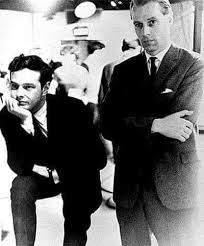
Brian Epstein was an ambitious music entrepreneur who managed the Beatles from 1961 until his death in August 1967. Epstein signed the Beatles with EMI’s Parlophone label, which became Capitol Records, and today is owned by Universal Music Group. Beatles songs were all produced by George Martin and remain a huge money maker, testifying to Brian Epstein’s ability to recognize talent, which itself is a talent, and then pair it with the necessary recording talent.

For the record, Brian Epstein was gay and like many stars & others of his era he died young (age 32) of a combined alcohol & barbiturate overdose, ruled accidental. Being gay is a difficult lifestyle, because apparently at some point there becomes an overwhelming need to separate from the mainstream. None of that conventional stuff satisfies. Beyond that, much of the conservative mainstream rejects gay, openly declaring its hostility.

Drugs & alcohol can become a refuge. Gay parties are different from straight parties. In my experience, there are much more drugs & sex going on at gay parties. Much of it is reckless & unprotected, as the attitude among many who are gay is to live it up today & die young. Many don’t want to live into old age, as they are in pain over their sexuality, and once it diminishes, their mental agony can become excruciating. Sadly this emotional pain leads to many early deaths.

Relationship building is an area where many people have issues. It’s especially hard for gays who have come out of the closet to trust straight people, because all straights said or did something offensive to their sensibilities at some point. It’s tempting for gays to become snowflakes on this, which doesn’t help anyone. Rehabilitation & education need to work together for there to be progress in sexual healing, but currently that is being cut out in favor of quackery, prejudice & identity politics. The real work that needs to be done is being actively resisted by all this.

After Epstein’s death, the Beatles attempted to manage themselves with Apple Records and it was a disaster. It wasn’t until after they officially broke up in the spring of 1970 that the Fab Four got they legal & financial issues in order so they could all get paid. Northern Songs was the famous Lennon-McCartney publishing company created under Epstein’s guidance. This got John & Paul paid equally on all their compositions.

George founded Harrisongs in 1964 which ensured he would get paid for his music. Ringo founded his own music publishing company, Startling Music Ltd, in 1968 after his deal with Northern Songs expired. Before the Beatles had begum to disintegrate as a band, each member was legally taken care of as far as songwriting, publishing & royalties. Those are the typical issues that break-up successful bands, and the Beatles showed the world how to handle it as it happened. “Creative differences” between band members is often rooted in legal issues that affect the commerciality of the act, along with who gets paid.

I’ve written in earlier posts that the Beatles wouldn’t be allowed to be successful in this 21-century era. The music industry has learned from the Beatles, punk rock, and 1990’s alternative rock/hip-hop. Those were times when popular music got out of their control and the industry doesn’t like that, even though it makes them billions of dollars. The industry wants to bottle everything up and endlessly sell it back to new generations of consumers, while never allowing another revolution in popular music. Historically, losing Frank Sinatra’s audience to rock & roll in 1955 started all this upheaval for the music industry. Charlie Parker & Sun Ra did the same in jazz.

You can’t stop history, which is metaphorically a raging river with unstoppable momentum & overwhelming power. Rock & roll is here to stay, and you can’t kill it. Same for reggae, rap, salsa, electronica, etc. Once a genre conquers the world, it becomes immortalized and can’t die because too many people, particularly kids, love it. It just keeps growing & flowing, increasing its influence as it goes along. All one can do is attempt to direct the flow. A revolutionary artist finds the best channel and directs all his/her energy into that historical task.

If the Beatles came along today and got their big audition on American Idol, Simon Cowell & company would listen for a bit, then insist to Paul that John be fired. Brian Epstein would be pushed out over a drug/sex scandal, etc, and Universal would handle all management through one of their preferred star agencies. This means Paul would be represented by CCA and be recognized as the undisputed band leader who gets all the songwriting & publishing money, while George & Ringo are a step above session musicians in this gig. If either protest they can easily be replaced. Drum machines that sample Pete Best & AI guitarists work much cheaper, making these new & improved Beatles more cost-efficient to the industry. This is the only way these new Beatles could be economically viable.

George Martin’s talents wouldn’t be applicable to these Beatles. Industry braintrust would surely prefer the guy who produced the Black Keys or Foo Fighters. New Beatles music would need that production edge with everything they’re missing, and George Martin is too subtle and respectful towards the artist to work in contemporary rock music which is now a top-down corporate-controlled project.

Under these conditions, John will struggle to get another opportunity as he’s too outside-the-box for this corporate era of music. He’s not sponsor friendly, so how can you market him? This is how all the gatekeepers & industry experts would understand a young John Lennon today. In this industry-created world, Paul McCartney & his New & Improved Beatles could become more popular than One Direction featuring Harry Styles. Of course, there wouldn’t be 1/10th the great songs from this new UK supergroup, but that’s just a cost of doing business.

Conclusion: There are great aspiring artists with the ability to make meaningful music, but it’s all being suppressed by ruling-class corporate which controls marketing, distribution & sales through its network of business partners, to which outsiders have no access. If you’re reading this, then you’ve discovered a real musical artist of the 21st-century. We’re all underground, censored & blacklisted by the establishment which has near-complete control over TV & the internet. It’s all dirty politics & big money that keeps us suppressed. Eventually the river of history will wash away all their detritus. This will happen when youth & working people unite in action, using music as a tool for revolutionary inspiration.

………..<><><><><>………..

Get Back (2021)

I just watched Get Back (2021) and it’s amazing! Get Back is directed & produced by Peter Jackson, who takes the vast film footage & audio material originally captured for Let It Be (1970) a documentary of the album by Michael Lindsay-Hogg, whose 16mm cinematography is stunning. Get Back seamlessly transports you back in time, while the digital editing & titles give it a clean modern look. Pushing eight hours in length, it never gets dull. It was all filmed & recorded in January 1969, and then finally put together just recently, but everything about this Beatles documentary is timeless.

Michael Lindsay-Hogg was a pioneer in music film production, who makes his face seen & voice heard in Get Back. For instance, there’s a debate among the band over 35mm vs 16mm for filming. Paul insists it should be 35mm, or else it won’t look right. Michael Lindsay-Hogg then interjects that 16mm will be fine, and that’s it. Watching in early 2022, it looks like Get Back was shot a few months ago, and put together quickly. Of course it was all shot 53 years ago, and took 4 years to produce. There are no flaws in the moving images, and the camera framing is exquisite, giving Get Back an authentic appeal.

This is mostly a testament to how well the original film crew & Michael Lindsay-Hogg did their jobs. This made the digital transfer much easier, and the result is one of the great rock documentaries ever, maybe THE best. And to think, it sat “in the can,” wasted & unused for decades. In many ways it compares to the Netflix release of Orson Welles’ famous unfinished film, The Other Side of the Wind in 2018.

Get Back is Disney property, which maintains strict monopoly distribution of its content. I’ve got friends who have pirated it, because that what happens when you try to “own” something that really should be public domain. Everyone has the right to see this film, as the Beatles are part of the fabric of our popular culture. I know it’s being called a TV series by Disney, but really it’s a 3-part movie that runs 468 minutes total. That’s too long of a film for most people, so it’s marketed as a TV-series.

This definitive Beatles documentary of their early break-up phase has an unending cast of interesting characters; Mal Evans, Peter Sellers [!] & (of course) Billy Preston are a few of my favorites. There’s plenty to choose from as each of the Fab Four comes to life under constant camera & microphone recording, which (in retrospect) was their recording of Let It Be, released in May 1970; after Abbey Road (September 1969), and after their break-up was officially announced by Paul in April. Paul is the one who tries the hardest to prevent their inevitable break-up, because he profits the most from working with John. Everyone loves Ringo, so it’s George that’s made the target of Paul’s frustrations.

The real war in Get Back is between Paul & John for band leadership. John had always been the leader of the Beatles, but increasingly Paul feels he is more than qualified to lead. The disagreements are creative, as well as financial. Linda Eastman makes her first appearance on the scene during filming, and becomes another of the cast of characters fans will come to know better in time. There’s a scene featuring Paul working out a song on piano, with Linda & Yoko talking in the background so we can’t hear them. As far as popular music & human interest goes, it hard to get much more fascinating than that.

Paul always had a tough time with Yoko, which meant a conflict with John. This is early tabloid era, where you just needed to refer to them by their first names. Nothing ever again approached 1960’s Beatlemania, not even K-pop. The Beatles separate oldies & doo wop from classic rock. The Beatles flipped the switch, and music went from AM to FM; from mono to stereo. John sings “Revolution” in different ways, single vs. album. The Beatles changed cover art & lyric writing. The Beatles led the counter-culture & anti-war movements. In a word, they forever changed everything in popular culture.

As a diehard Velvet Underground fan, I take the Beatles as the pop standard no one can match. The Velvets did their underground Factory multi-media show with Andy Warhol & Nico in 1966. The Beatles were attempting to put on some kind of TV show in Get Back, but mostly it’s bad ideas, and then the drama of George leaving the band for a few days over Paul’s harassment. Artistically, the Velvets were far ahead of the Beatles in many important ways, but they were both broken-up (around the same time) by the same industry forces.

George was always the weakest link in the Beatles, and not coincidentally he’s the one who was most taken-in by Allen Klein in his post-Beatles career. George has a weakness for mysticism and is most-influenced by John, whom he idolizes for his songwriting & emulates in his singing style. George also is in awe of Paul for his prolific songwriting, musicianship & sweet singing voice; and thus covets his respect & approval.

Allen Klein is introduced to John & Yoko on the evening of January 26, 1969, and it’s referenced, but not filmed in Get Back. It helps if you know your Beatle-ology here, as Allen Klein is one the most notorious & prolific conmen in music business history. Allen Klein made a career for himself by ripping-off artists such as Sam Cooke, and then the Rolling Stones with his ABKCO Records, but his ultimate ambition was to manage the Beatles. Eventually he would, over Paul & Linda’s strenuous objections. It was definitely one of those times in Beatles’ history where Paul was right. Allowing Allen Klein to manage Apple Records for just a few years, led to bad personnel decisions, millions in lost royalties & endless lawsuits.

In Get Back, Paul has ideas for his new songs, that George can’t get to. It’s a truth of the Beatles that John is their best guitar player. George offers little when it comes to being a “lead guitarist,” and that’s why in his early solo career he worked with Eric Clapton so much. By 1969, George is a rhythm guitarist & aspiring songwriter, who is of little use to Paul. This is why Billy Preston is the key to making the Get Back sessions work, as the “Fifth Beatle.” As Paul acknowledges, “Billy Preston solves a lot of problems,” meaning his musicianship helps Paul realize his songs more fully, which eases George back into the band and relieves the pressure, which was immense.

Most Harrisongs aren’t Lennon-McCartney quality, but any attempt at songwriting is always welcome in any serious band. John encourages it, while Paul mostly dismisses George’s new ideas. The hardest thing to do is produce good new material. The Beatles did this for a dozen albums, all classics, due to an amazing songwriting team in Lennon-McCartney, which gave them a freshness & unique sound that always put them at the cutting edge, from mop-top sensations, to rock pioneers of studio recording.

A lot of people like to slag Paul, but I’ll take him in my band any day. Bass players are hard to find, and prolific songwriters are even rarer. That’s why John latched onto him when they were the Quarrymen. To have talent means you recognize it in others. The hard truth was that most of George’s new songs weren’t that good, but he had colleagues (outside the band) who were telling him they were, so egos start flying.

One can argue that it was George Harrison who broke up the Beatles, as he wanted to do a solo album of songs that Paul wouldn’t do, and John wasn’t crazy about. Or you could just Let It Be. For those who don’t know, writing songs is serious business, and the true artists who can do it don’t hand out free passes just because you’re a bandmate with ambition. You have to deliver, repeatedly, at a high level. These lessons in collaborative creativity & artistic standards remain relevant today.

The confusion that permeates their first rehearsal location, as well as the Apple Records studio are brought into focus when George Martin finally arrives, and promises the band in his assured & professional style that he will get all the sound issues straightened-out by the next day. The band finally breathes a sigh of relief as they leave. This is how it was.

The Beatles never really had a manager who could handle everything, because nothing like the Beatles had ever happened before. Brian Epstein had their best interests at heart and guided them to stardom, but he wasn’t tough, and he died in August 1967. Apple Records was established in January 1968, with no leadership, which meant the Beatles financial issues wouldn’t start to get resolved until the mid 1970’s.

But they always had a great producer in George Martin, and that’s more important, because if you don’t make great records then no one cares. Great records start with great songs, which means the producer has to recognize it, and then record an inspired performance. Then it can be produced. Get Back proves once again that no matter how gifted you are creatively & musically, you need a producer with a clear head.

The legends of decadence & excess at Apple Records are confirmed in Get Back, with all kinds of stoned employees, gay groupies & other hangers-on, etc, occupying the studio. Who are these fucking people? Answer: It was the 1960’s. Many appear well-meaning, but too many are wasted and none can handle the Mafiosos constantly in the background, rubbing their hands over how much money they were going to make. It should be noted in retrospect that it’s this lack of attention to security that ultimately got John killed.

Perhaps the best part of Get Back is when the Apple employees handle the bobbies, as the Beatles are playing their final concert unannounced on the rooftop of Apple Records in London. “It’s making quite a bit of racket… We’ve had over 30 complaints already,” claims the UK cop immortalized in the footage. Apple Records receptionist Debbie, and Beatles road manager, Mal are priceless here. So much love went into this music created by John, Paul, George, Ringo & Billy with their ever-producer, George Martin, and yet it’s the businessmen who are raking. That’s how it is when you’re an artist, and it’s all in the film.

…………<><><><><><><><>…………